Steady comfort, all year long
This HVAC contractor in Baltimore handles the full range of heating and cooling work — no-heat calls, AC that won't cool, full system replacements, and seasonal tune-ups — for rowhomes and detached houses from Canton to Roland Park. If you searched for an HVAC contractor near me and want a straight answer on cost and timing, you get a ballpark up front and the exact price confirmed on a free on-site visit. The crew works clean, protects floors and stair walls on the way in, and explains the repair-versus-replace math before anything gets installed.

Tell us about your hvac contractor job — we'll get you a fast quote.
A firm, all-in price confirmed before we start — no surprises.
On time, done to standard, and tidy when we leave.
Reach a real Baltimore hvac contractor technician to describe the problem — no call-center runaround.
We look at the actual system and explain what is going on before any work.
You get the price for the fix up front and decide before we proceed.
Serving Baltimore and the surrounding area — confirm coverage by phone.
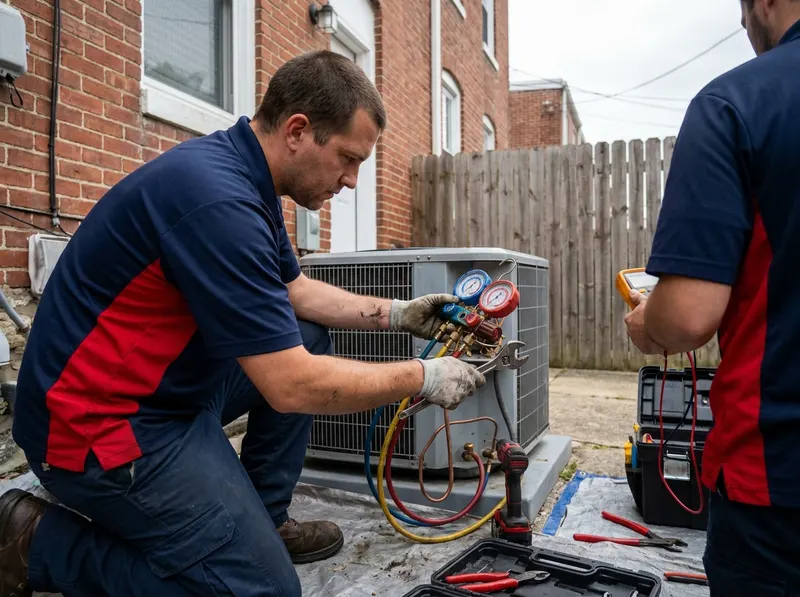
The most common Baltimore AC calls fall into a few buckets: a system that hums but the outdoor fan won't spin (often a failed capacitor), a unit blowing warm air (low refrigerant from a leak, or a tripped compressor), and water pooling near an indoor unit (a clogged condensate line). A capacitor or contactor replacement is a same-visit fix. A refrigerant leak needs to be located and sealed before recharging — recharging a leaking system just delays the same failure and wastes money.
Baltimore's housing stock shapes the repair. Federal Hill, Canton, and Fells Point rowhomes frequently run ductless mini-splits or slim high-velocity systems because there's no room for full ductwork; those need technicians comfortable with electronic boards and inverter faults, not just belt-and-motor work. Larger detached homes in Roland Park, Guilford, and Bolton Hill usually run central split systems with the condenser in a side yard or alley, where debris and cottonwood clog the coil. Charles Village and Mount Vernon apartments and converted units often share condensate drainage, so a summer overflow can affect more than one unit.
Repair makes sense when the system is under roughly 12 years old, the fault is isolated, and the repair cost is a fraction of replacement. When a compressor has failed on an older R-22 system, repair often costs more than it's worth because R-22 refrigerant is expensive and being phased out — in that case replacement is the honest recommendation, and a technician should say so rather than sell an expensive dead-end fix. Baltimore's stretch of humid 90-plus days puts real load on aging equipment, so a marginal unit that limps through May will often fail in the first July heat wave; catching a weak capacitor or dirty coil early is cheaper than an emergency call.
Before any parts are replaced, the diagnostic finding is explained and the price is confirmed. That keeps the decision — repair now, repair later, or plan a replacement — in the homeowner's hands.
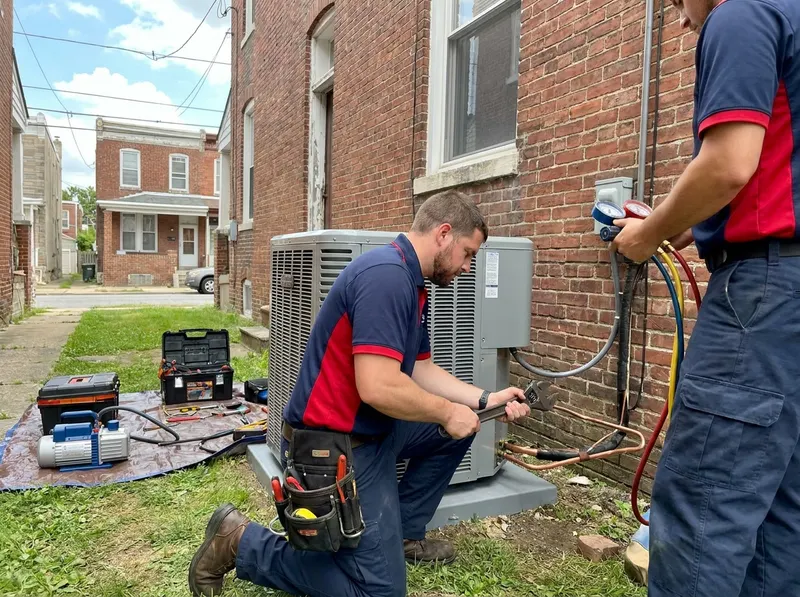
The right system depends heavily on the building, and Baltimore's housing stock varies block to block. A Federal Hill or Fells Point rowhome with limited yard space and no existing ducts is often a strong candidate for ductless mini-splits, which mount on interior walls and need only a small line-set penetration to the outdoor unit. A detached Roland Park or Guilford home with an unfinished basement and attic usually has room for a conventional central AC or a full central heat pump run through ductwork. The decision comes down to what the structure can physically accommodate and how you want to zone the cooling.
Replacement makes sense when a system is past roughly 12-15 years, uses discontinued R-22 refrigerant, or needs a compressor repair that costs a large share of a new unit. Repair is the better call when a newer system has an isolated failure like a capacitor or contactor. For Baltimore's older homes in Bolton Hill, Mount Vernon, and Charles Village, a common trade-off is central vs. ductless: central cools evenly and hides the equipment but requires duct space and can disturb plaster, while ductless installs faster with less demolition but puts a visible head in each room. On a free visit we measure the space, check panel capacity, and lay out both paths so the choice is yours.
Sizing is the step that gets skipped most often, and oversizing is a real problem in Baltimore's humid summers. An oversized unit cools the air fast but short-cycles before it pulls out enough moisture, leaving rooms cold and clammy — a frequent complaint in tightly built Canton and Locust Point rowhomes. We size to the actual heat load so the system runs longer, quieter cycles that dehumidify properly. Because Baltimore City is an independent jurisdiction with its own permitting, HVAC installs here follow city permit and inspection rules; we handle that paperwork as part of the job.
Older Hampden and Charles Village homes sometimes need electrical panel attention before a new outdoor unit can be added, and rowhome condenser placement — rooftop, rear pad, or side alley — affects both cost and noise. We flag those items on the assessment so the written quote reflects the real scope, not a surprise on install day.
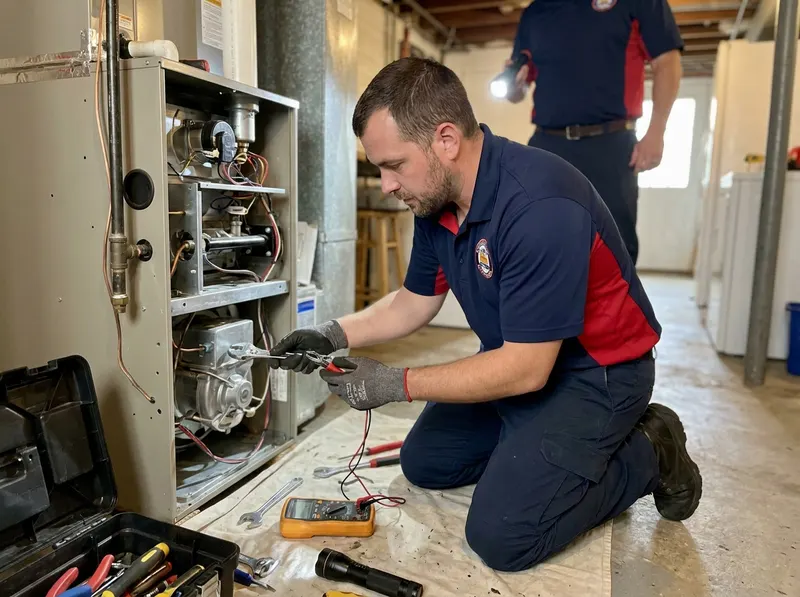
A furnace that won't fire is the most common winter call, and the cause is usually a worn igniter or a dirty flame sensor rather than the whole unit. On the row homes in Canton and Fells Point, furnaces are often tucked into tight basements or converted mechanical closets, so access and venting get checked first before any part is condemned. In Roland Park and Guilford, older homes frequently run larger, aging furnaces where a cracked heat exchanger or a failing inducer motor turns up during diagnosis. We test the actual failure point instead of swapping parts on guess.
Furnace repair is the right call when the unit is under roughly 12-15 years old, the failure is a single component, and the heat exchanger is sound. Once a furnace is past 15 years, showing repeat failures, or has a compromised heat exchanger, replacement usually makes more financial sense than a $600 repair on a unit near end of life. We give you the honest trade-off on-site, including the repair cost against what a new install would run, so you're not paying twice.
Baltimore's freeze-thaw winters and older housing stock create predictable problems: condensate lines that freeze on high-efficiency units in Federal Hill basements, clogged filters starving airflow in Hampden and Charles Village, and cracked flue connections in Mount Vernon and Bolton Hill brick homes with long vent runs. Short-cycling and a furnace that trips on a limit switch often trace back to airflow, not the burner. Because Baltimore City is its own jurisdiction, gas furnace work follows city permitting where it applies, and we keep repairs within code.
A repair visit starts with the $150 diagnostic and safety inspection. If the fix is straightforward and the part is on the truck, it's handled the same day; if a control board or blower motor has to be sourced for an older Locust Point unit, we confirm the price before ordering. You get the exact number before any work begins.
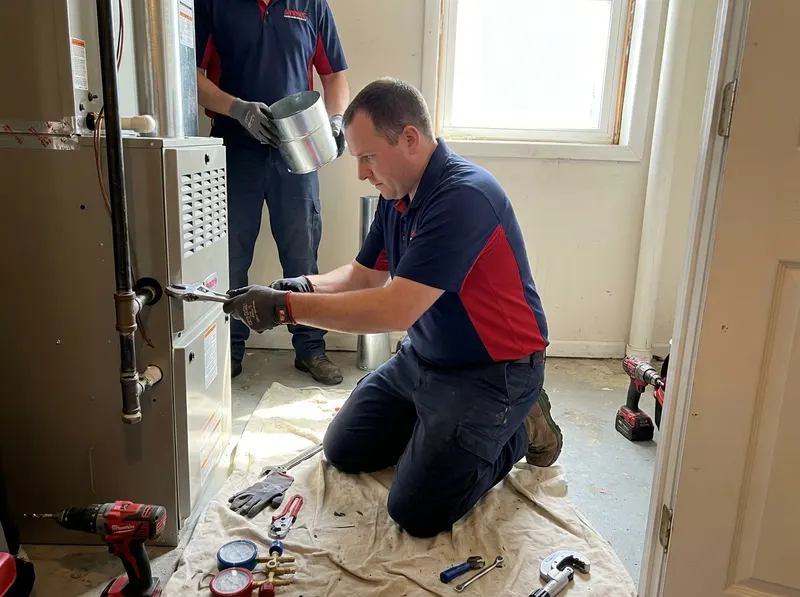
A furnace replacement makes sense when a unit is past 15 to 20 years old, needs repeated repairs, or can no longer hold a set temperature through a cold Baltimore January. Repair is usually the better call for a newer furnace with a single failed part like an igniter or blower motor. The trade-off is straightforward: replacing a dying unit costs more upfront but ends the cycle of service calls and cuts fuel use, while repair keeps cost low on a furnace that still has years left. We give you both numbers at the visit so the choice is yours, not ours.
Baltimore's older housing stock shapes a lot of these installs. The narrow rowhomes in Canton, Federal Hill, and Fells Point often have furnaces tucked into tight basements or closets, so unit dimensions and clearance matter as much as heating capacity. Larger detached homes in Roland Park, Guilford, and parts of Bolton Hill frequently run long duct branches, which means the furnace has to be sized and staged to push heat evenly to upper floors. In Hampden and Charles Village we regularly see gravity-era conversions where duct sizing needs a real look before a modern high-efficiency unit goes in. Getting the venting right is critical on high-efficiency condensing furnaces, which exhaust through PVC rather than the old brick chimney many of these houses still rely on.
Because Baltimore City is an independent jurisdiction with its own permitting, gas furnace installs are permitted and inspected through the city, and we handle that paperwork so the job passes inspection cleanly. We match the fuel type to what your home already runs, whether that's a natural gas line or an electric setup, and we confirm the meter and gas supply can handle the new unit before we finalize sizing. If your ductwork or venting needs work to support the furnace you want, we flag it in the quote rather than after the install.
Every replacement gets a startup test before we leave: we verify the burner lights properly, the blower moves the rated airflow, the thermostat cycles the unit correctly, and the exhaust vents safely. That final check is where a right-sized install pays off, because an oversized furnace short-cycles and wastes gas while an undersized one struggles through the coldest nights near the harbor and in Locust Point where wind off the water drops the felt temperature.
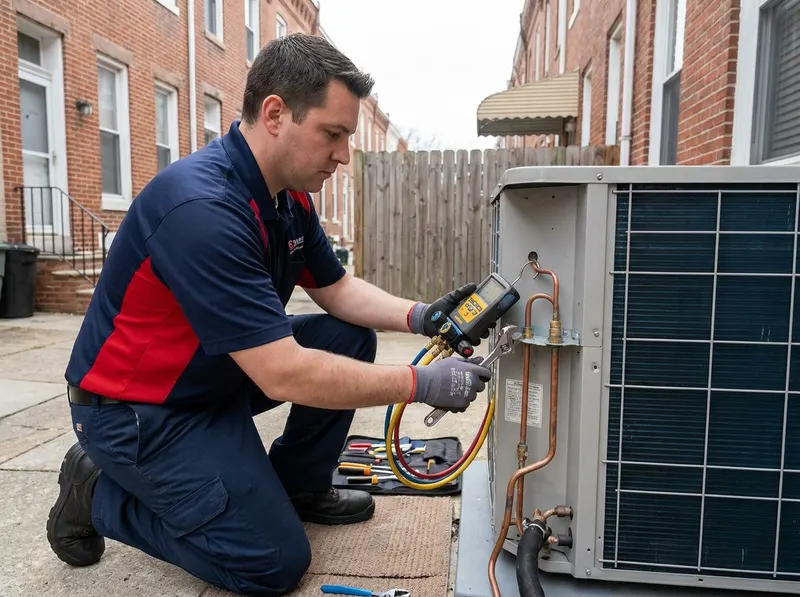
A heat pump handles heating and cooling from the same equipment, which means small problems show up in both seasons. Common Baltimore service calls include a unit that runs constantly on cold January mornings, ice building up on the outdoor coil, weak airflow, or the auxiliary heat strips kicking on far too often and spiking the electric bill. Service starts with a full check of refrigerant charge, the reversing valve, the defrost control, and the outdoor coil, because any one of those can make a healthy compressor look like a failing one.
Heat pumps are common in Baltimore rowhome retrofits and additions where running new gas lines is impractical, so Canton, Federal Hill, and Fells Point see a lot of them. In tighter Locust Point and Bolton Hill lots, the outdoor unit often sits in a narrow side yard or against a shared wall, and it needs clear space and good drainage under it to defrost properly — a unit packed against fences or buried in leaves will freeze up and lose capacity. Roland Park and Guilford homes with older systems sometimes pair a heat pump with a backup furnace, and getting the changeover setpoint right on that dual-fuel control is a frequent tune-up item.
Heat pump service fits when your existing system is sound but underperforming — short cycling, uneven rooms, a coil that ices over, or a jump in your BGE bill. Repair makes sense over replacement when the compressor is healthy and the fix is a capacitor, contactor, sensor, or a controlled refrigerant top-off after a small leak is sealed. If the compressor is failing on a system past its useful life, replacement is usually the better spend, and that recommendation is made plainly rather than throwing parts at an old unit.
Baltimore's freeze-thaw winters are hard on defrost components, and the humid Inner Harbor air corrodes coils and outdoor electricals faster than in drier climates. A seasonal tune-up before heating season catches worn contactors and low charge early, when the fix is cheap. Because Baltimore City is an independent jurisdiction with its own permitting, any work that touches gas or electrical service is handled to city code.
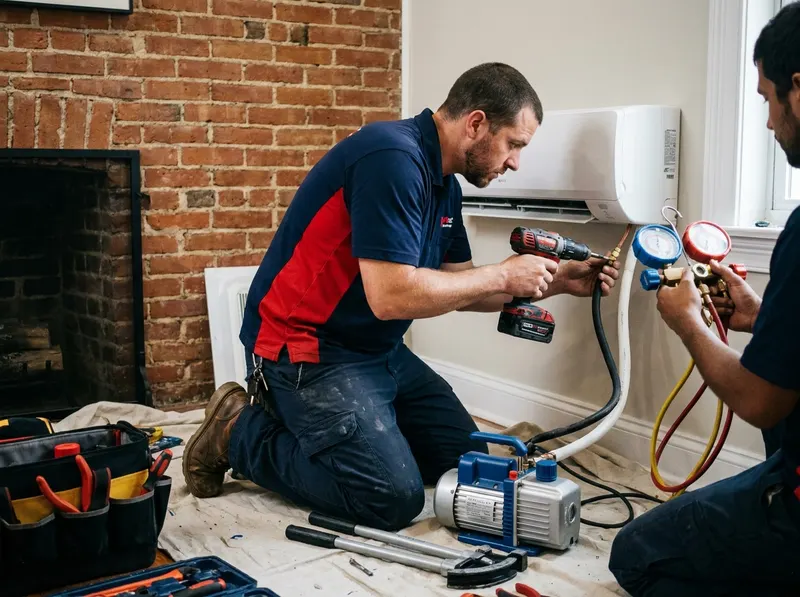
Ductless makes the most sense where forced-air ducts do not already exist or cannot reasonably be added. Baltimore's brick and formstone rowhomes in Federal Hill, Canton, and Fells Point often have no room to hide bulky trunk lines, and a mini-split solves that with a three-inch wall penetration instead of demolition. Finished basements in Hampden, third-floor primary suites carved out under sloped Roland Park roofs, and rear kitchen additions are all common candidates. Because each indoor head runs independently, a mini-split also lets you condition one problem room without oversizing a whole-house system.
The alternative is extending or installing central ductwork, which is usually the better long-term choice when a home already has a working duct network or an open floor plan that supports one. Central air distributes more evenly across many rooms and hides all equipment out of sight. The trade-off is disruption and cost: adding ducts to a plaster-walled Bolton Hill or Guilford home means opening ceilings and building chases, while a ductless head is visible on the wall. For a single stubborn zone, ductless wins on speed and mess; for four or more rooms with existing chases, central often wins on aesthetics and per-room economics.
Sizing matters more than brand. An oversized head short-cycles and leaves rooms humid, a real concern during Baltimore's muggy Inner Harbor summers. We size each zone to the actual room load, factoring in west-facing windows, top-floor heat gain in Charles Village walk-ups, and the tight envelopes of Mount Vernon's tall narrow units. Line-set routing is planned to reach the outdoor unit along a rear wall or alley side, which keeps the compressor off the street face and respects the front elevations common in historic districts. Baltimore City is an independent jurisdiction, so electrical and mechanical permitting follows city rules rather than county ones, and we handle that as part of the job.
Modern heat-pump mini-splits also heat, which suits Baltimore's mild-to-moderate winters well. A properly sized cold-climate head covers most heating days in a Locust Point or Federal Hill zone and pairs with existing baseboard or a furnace as backup on the coldest nights.
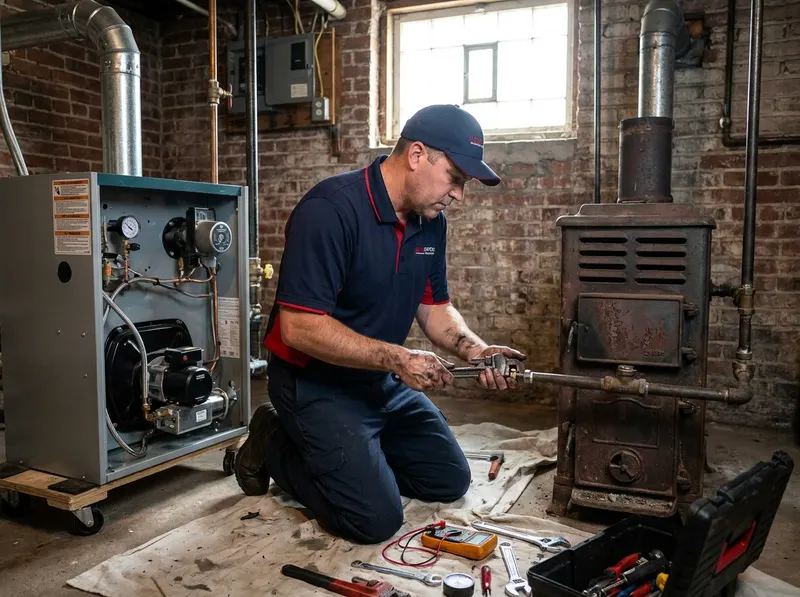
Repair makes sense when the boiler itself is sound and the failure traces to a replaceable part. A stuck circulator pump, a failed low-water cutoff on a steam boiler, a leaking expansion tank, or a bad aquastat are all common and repairable. Many Federal Hill and Canton rowhomes still run cast-iron boilers that were built to last decades, so a targeted repair on an otherwise solid unit is usually the better value. If a boiler is under roughly 15 years old and holding pressure, repair is the practical path.
Replacement becomes the smarter call when repairs stack up, efficiency drops, or a cracked heat exchanger or rusted-through steam boiler section shows up. Older atmospheric boilers in Bolton Hill and Mount Vernon townhouses often run at low efficiency, and a modern gas boiler can meaningfully cut winter fuel use. The trade-off is upfront cost: a replacement is a larger investment than a repair, but it ends the cycle of recurring breakdowns and lowers monthly heating bills. On a boiler past 20 years old with a major failure, replacing is generally the sounder decision.
Baltimore City housing stock shapes this work more than most places. Roland Park and Guilford homes tend to have larger hydronic systems with multiple zones, while the narrow rowhomes of Canton and Locust Point often have tight mechanical closets that limit which boiler models physically fit. Steam boilers, still common in older Federal Hill blocks, need correct sizing to the connected radiator load — an oversized replacement short-cycles and wastes fuel. Winter pipe-freeze risk in unheated basements and vestibules also makes fast no-heat repair a priority once temperatures drop near the Inner Harbor.
Every job starts with a full diagnosis so the recommendation matches the actual condition of the boiler, not a guess. Steam and hot-water systems behave differently, and the right fix depends on fuel type, age, and how the home is piped. A visit confirms whether a part swap restores reliable heat or a replacement is the better long-term move.
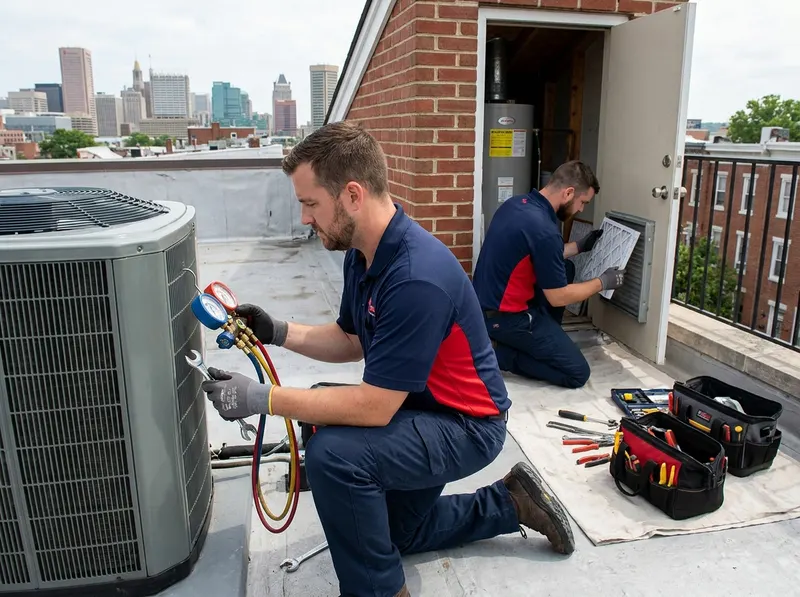
A maintenance plan makes the most sense for homeowners who plan to stay in their system for several years and want to spread service across the calendar rather than react to breakdowns. The spring visit focuses on cooling: checking refrigerant charge, cleaning the condenser coil, testing the capacitor, and clearing the condensate drain. The fall visit focuses on heating: inspecting the heat exchanger, checking burners and ignition, and verifying safe combustion or heat pump reversing-valve operation. If you rarely think about your HVAC until it stops working, a one-time tune-up may fit better than a plan, but the trade-off is losing the priority scheduling and consistent record that plan members build over time.
Baltimore's housing stock shapes what maintenance visits actually find. In the rowhomes of Canton, Federal Hill, and Fells Point, tight mechanical closets and rooftop or basement units mean airflow and drain lines get inspected closely, since a clogged condensate line can back up fast in a compact space. The older detached homes of Roland Park, Guilford, and Bolton Hill often run boilers or aging furnaces alongside retrofitted central air, so a plan visit checks both systems for wear. Homes near Druid Hill Park, Hampden, and Charles Village deal with heavy tree cover that drops debris into outdoor condensers, which is why coil cleaning is a standard part of the summer visit.
Humidity is the recurring theme across Baltimore City. The stretch from June through August pushes cooling systems hard, and undersized or dirty coils struggle to pull moisture from the air in neighborhoods close to the Inner Harbor and Locust Point. A maintenance plan catches a weak capacitor or low refrigerant before a July heat wave turns it into an emergency call. In Mount Vernon's older converted buildings, where mechanical access can be awkward, having a technician already familiar with your setup shortens future visits.
All plan pricing is a ballpark until a technician sees the equipment. Systems with two furnaces, add-on humidifiers, or older components may fall outside standard plan pricing, and the exact figure is confirmed on-site before any work begins. Enrollment does not lock you into repairs beyond the covered inspection and cleaning.
If your furnace or AC is under about 10 years old and the failed part is minor, a repair is the right call — you keep a working system for a few hundred dollars. If the unit is 15-plus years old, the repair runs past $1,500, or you're facing a second breakdown in a season, replacement usually wins because you stop pouring money into a system that's near the end anyway. For older Baltimore rowhomes without existing ductwork, a ductless mini-split fits where adding ducts would mean tearing into plaster and losing closet space; a conventional split system fits homes that already have good ductwork and want the lowest equipment cost. If you heat with an old boiler and radiators, a modern high-efficiency boiler keeps the radiant comfort you're used to, while switching to a heat pump lowers summer cooling cost but changes how the heat feels. The trade-off across all of these is upfront cost versus monthly energy bills and how many more years you plan to stay in the house.
| On-site diagnostic / minimum charge | $150 |
| AC or furnace tune-up | $150 - $250 |
| Common AC repair (capacitor, contactor, cleaning) | $150 - $600 |
| Refrigerant recharge / leak repair | $300 - $900 |
| Common furnace repair (igniter, sensor, motor) | $150 - $850 |
| Central AC or heat pump replacement | $5,500 - $11,000 |
| High-efficiency furnace replacement | $4,500 - $9,000 |
| Ductless mini-split (single zone, installed) | $4,000 - $7,500 |
| Boiler replacement | $6,000 - $13,000 |
Call for a firm, all-in price before any work begins.
We give an upfront, written price before any work begins — you approve it first. No surprises.
Our work is done to standard and we stand behind it — a real fix, not a quick patch.
We’ll give you an honest assessment. If you don’t need the work, we’ll tell you.
Baltimore's housing stock skews old — narrow brick rowhomes near Patterson Park and Fells Point, formstone fronts, and detached homes up in Roland Park and Guilford — which is why sizing and access matter more here than in newer suburbs. Many rowhomes have no room for standard ductwork, so ductless mini-splits and slim high-velocity setups often fit where a conventional system won't, while the older stone-and-plaster homes near the Baltimore Museum of Art frequently still run boilers and radiators worth keeping. Baltimore City is an independent city with its own permit process separate from Baltimore County, and summer humidity coming off the Inner Harbor pushes cooling systems harder than the temperature alone suggests — a good reason to size AC by load, not by square-foot rules of thumb.